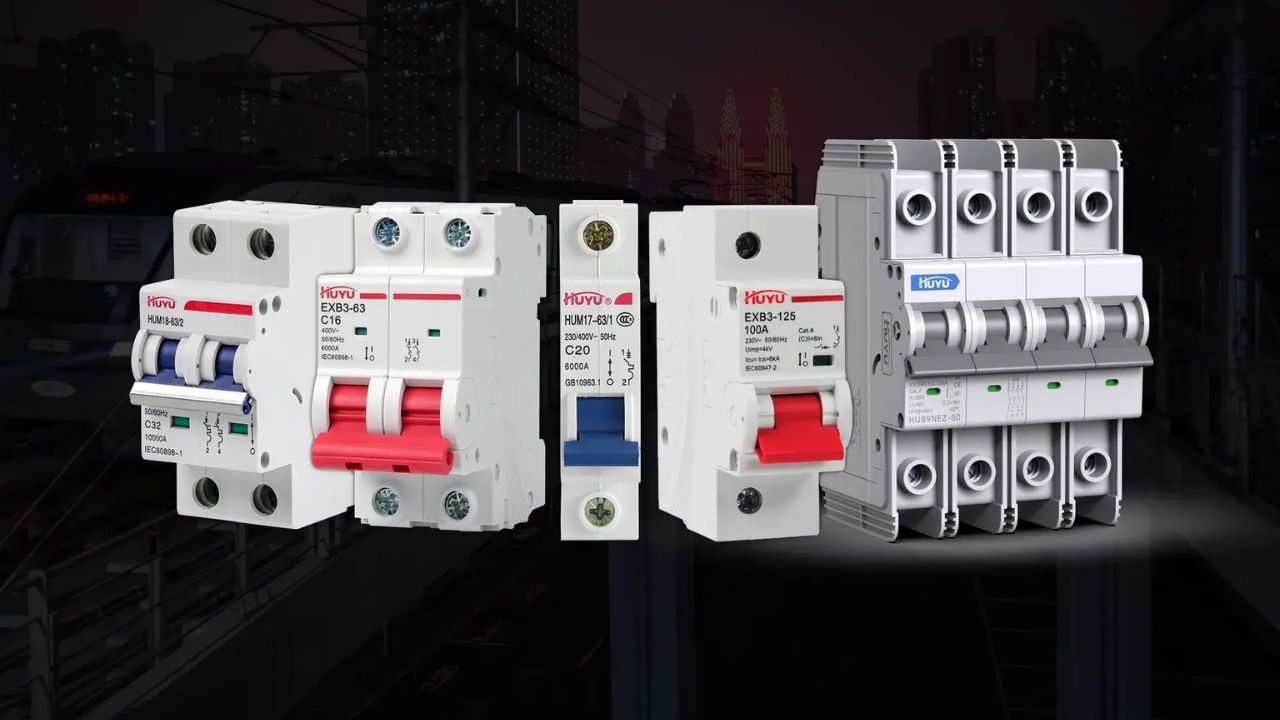
Miniature Circuit Breakers (MCBs) are an essential element of contemporary electrical systems, which are used to offer defense against overcurrent, short-circuit, and electrical faults. It is important to choose an MCB since the wrong option may cause frequent breaking of the circuit, electrical damage, or even safety risks. The fundamental concepts of the Miniature Circuit Breakers (MCBs) functioning are the same, but the needs of residential and commercial applications are also quite different. The engineers, electricians, and facility managers who seek to provide safe and efficient electrical distribution must understand such differences.
Understanding MCB Basics
An MCB is a mechanical control that opens and closes a current of electricity upon sensing uncontrolled currents. The benefit of the MCB over the traditional fuse is that it can be reset, rather than replaced again, which is convenient and has a long life. MCBs are classified based on their rated current, voltage, and tripping values, usually represented by B, C, or D curves. These parameters tell the speed at which MCB reacts to overcurrent conditions. When choosing an MCB, both the environment and the electrical load must be taken into account.
Residential Applications
At home, the electrical supply is used mainly to supply light, domestic appliances, and entertainment products. Its loads are usually predictable and not as large as those on a commercial installation. B-type tripping curves are mostly used in MCBs used in residential conditions. B-type MCBs will clear three to five times the current rating, so they can be used on low inrush current circuits (e.g., lighting or socket outlets).
Residential applications are another area of concern, and the rated current of the MCB is another consideration. The usual range of standard ratings is 6A through 32 A, which varies according to the circuit in question. Excessive current ratings may cause the loss of protection, and undue tripping may happen as a consequence of inadequate current ratings. Also, in residential applications, single-phase power is commonly used, making it easier to select, although three-phase MCBs could be required in larger residences where high-capacity equipment is required.
Commercial Applications
Commercial electrical systems, on the other hand, process bigger and more complicated loads. Machines, HVAC systems, and computer networks with high power consumption tend to be running in so many offices, retail areas, hospitals, and industrial premises at the same time. These requirements imply that MCBs are required to have the capability to support increased currents and dynamic inrush currents without jeopardizing the protection.
C-type or D-type MCBs are usually sought after in commercial applications. C-type MCBs are set to trip between five and ten times the rated current, so they are used in circuits with moderate inrush currents that include fluorescent lighting or small motors. D-type MCBs have tripping currents between ten and twenty times the rated current, and are suitable for heavy equipment with high start-up currents, such as industrial machines or large HVAC units.
Considerations of the Environment and Load
The selection of the appropriate MCB also requires the evaluation of the environment in which it is being installed and the nature of the load. Residential MCBs are normally used in moderated indoor conditions, whilst commercial MCBs might require more robustness against hotter ambient conditions, dust, or even vibration in industrial surroundings. Derating of the temperature, the panel layout, and selective coordination with other protective devices should be taken into account in order to provide a good performance.
Choice is also dependent on the kind of load that has to be loaded on the MCB. Resistive loads, e.g., heaters or incandescent lighting, have lower inrush currents, in contrast to inductive or capacitive loads, e.g., motors and transformers, which produce higher transient currents. Such peaks are seldom seen in residential circuits, but will be common in commercial systems. Tripping is avoided, and electrical hazards are reduced by using an MCB that is designed to accommodate these variations.
Conclusion
To choose the right MCB that can be used in residential and commercial applications, one needs to have a profound knowledge of electrical loads, tripping features, and the environment. In residential applications, MCBs have low to moderate current protection, are user-friendly, and are used in predictable conditions, so a B-type breaker is often used. Commercial MCBs require stronger breakers with C or D-shaped curves in order to support complicated and high-power connections. Careful consideration of the unique needs of a particular application can guarantee effective protection by the engineers and the electricians, improve the operational safety, and increase the life of the electrical systems. Being well chosen is not only a way of protecting property and equipment, but it also gives the residents and those managing the facility a good night’s sleep.