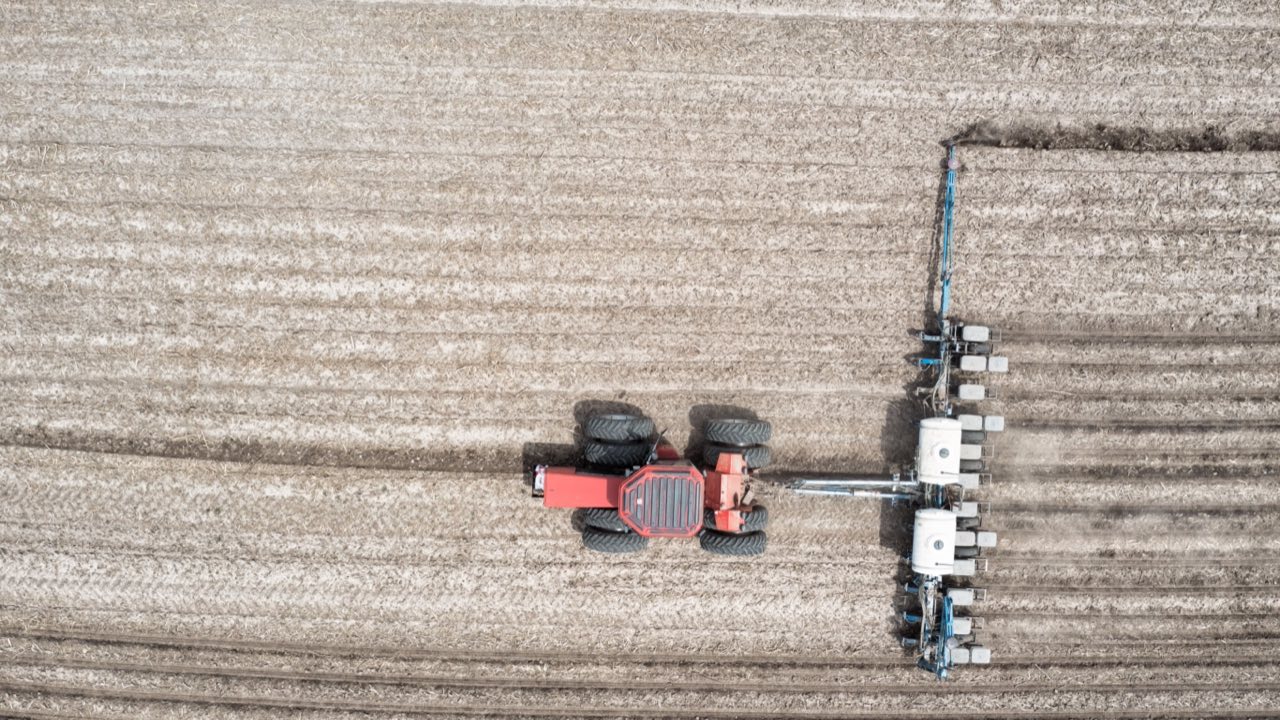
GPS tracking on farm equipment is one of those technologies that gets taken for granted until it stops working reliably. When it’s working, the position log is accurate, the field coverage maps are clean, and the auto-guidance system holds its lines within a few centimeters. When it’s not working, the symptoms are varied enough that diagnosing the actual cause takes more than checking the obvious things first.
Inconsistent GPS results on agricultural equipment don’t always mean the GPS system is failing. They often mean something in the system — the antenna, the receiver, the correction signal, the installation — has changed or degraded. Working through a structured diagnosis is faster than replacing hardware speculatively.
The First Question: What Kind of Inconsistency?
The specific symptom narrows the diagnosis considerably.
Position jumps: sudden large errors in reported position, followed by a return to accurate position. Typically indicates momentary loss of satellite signal (signal obstruction or interference), multipath error (reflected signals confusing the receiver), or a correction signal dropout that causes the receiver to fall back to uncorrected GPS and then recover.
Gradual position drift: position accuracy that degrades slowly over time during operation, rather than jumping suddenly. Often indicates thermal effects on the antenna or receiver hardware, or a correction signal that’s operating normally but with increasing latency.
Systematic offset: position consistently 1-3 meters off in a particular direction across all field operations. Suggests an antenna installation issue — the antenna position hasn’t been accurately measured and entered into the guidance system’s configuration, or the antenna has moved from its original surveyed position.
Complete loss of fix: receiver can’t establish a position at all, or establishes one briefly and then loses it. Points to signal obstruction, receiver hardware problems, or a severe interference source.
Antenna Condition and Position
The gps antenna on agricultural equipment lives a harder life than most GPS antennas. It’s exposed to UV radiation, temperature extremes, vibration from the equipment, impact from crop material during harvest operations, and chemical exposure from spray operations. Any of these can degrade antenna performance in ways that don’t look like physical damage from the outside.
Check for physical damage: a cracked antenna housing compromises weather sealing and can allow moisture into the antenna element or cable connection. Even small cracks that don’t expose the interior immediately can allow water ingress over time as the antenna cycles through temperature extremes. Inspect the antenna body and the cable connection point at the base of the antenna.
Check the cable: the coaxial cable between the GPS antenna and the receiver is a common failure point on agricultural equipment. Vibration and flexing at connection points — where the cable enters the cab, where it routes around moving components — can cause internal conductor breaks that aren’t visible externally. A cable that looks fine may have an internal break that causes intermittent signal loss. If the antenna condition and position check out, swapping the cable is a low-cost diagnostic step.
Verify antenna position: guidance systems require the antenna position relative to the vehicle’s pivot point or rear axle to be accurately entered for precise pass-to-pass accuracy. If the antenna has been moved — a replacement, a bracket adjustment, repair work that disturbed the mount — the position measurement needs to be re-entered. Even a 5cm error in antenna position measurement introduces a systematic guidance error.
Check for obstructions: something that wasn’t there before may now be blocking sky view from the antenna. A newly installed accessory, a cab modification, a piece of equipment mounted above the cab — anything that reduces the antenna’s view of the sky reduces the number of satellites available and can cause the symptoms above.
Correction Signal Issues
Modern agricultural GPS guidance operates using a correction signal that dramatically improves accuracy beyond what standalone GPS provides. The correction signal source — RTK base station, NTRIP network, subscription correction service (SBAS, WAAS, EGNOS), or private network — determines both the accuracy level available and the failure modes when the signal is disrupted.
RTK via local base station: provides the highest accuracy (2cm or better) but depends on the base station being operational, the radio link between base station and rover being functional, and the rover being within range of the base station (typically 10-20km). If the base station is down, moved, or the radio link fails, the rover either falls back to lower-accuracy GNSS or loses correction entirely. Check the base station status and the radio link signal strength as part of the diagnosis.
NTRIP correction over cellular: accuracy comparable to RTK, delivered over the cellular data network. Disrupted by cellular coverage gaps in the field, high network latency during busy periods, or authentication/subscription issues with the correction service provider. Position jumps that correlate with moving between areas of the field may indicate cellular coverage variation.
Subscription satellite correction (e.g., RTX, TerraStar, OmniSTAR): delivered via satellite, generally more consistent coverage than cellular NTRIP but not immune to signal loss. Antenna obstructions that affect GPS satellite reception may also affect the correction signal reception if it’s delivered via a separate antenna.
Multipath Interference in Agricultural Environments
Multipath — GPS signals reflecting off surfaces before reaching the antenna — is a well-known cause of GPS position errors that’s often underappreciated in agricultural applications. The moving surfaces of agricultural equipment create multipath conditions: a large grain tank, a header on a combine, an extended sprayer boom.
A sprayer with booms extended creates a very different RF environment for the cab-mounted GPS antenna than the same sprayer with booms folded. The extended metal booms reflect GPS signals and can cause multipath errors that reduce accuracy during field operations compared to transport. This is a structural characteristic of the installation, not a malfunction — and it’s why GPS antennas are ideally positioned to maximize sky view while minimizing nearby reflective surfaces.
When to Suspect Interference
RF interference from other electronic systems on the equipment or in the environment can degrade GPS signal quality. Modern agricultural equipment has a lot of electronics — hydraulic control systems, engine management, electrical systems for lighting and implement control, precision application systems with their own radio communications. Any of these can generate RF noise that affects GPS receiver performance.
If GPS problems started after new equipment was installed or wiring was changed, interference from the new addition is worth investigating. A GPS antenna that’s routed near a power cable, near the engine management module, or near a 2.4GHz radio used for other purposes on the machine may pick up interference that manifests as intermittent accuracy problems.
The diagnosis for interference is usually location-specific: the problem occurs in certain equipment configurations or when certain systems are operating. If GPS accuracy is consistently worse when the sprayer pump is running, or when a specific cab accessory is powered on, the correlation points to interference from that system.