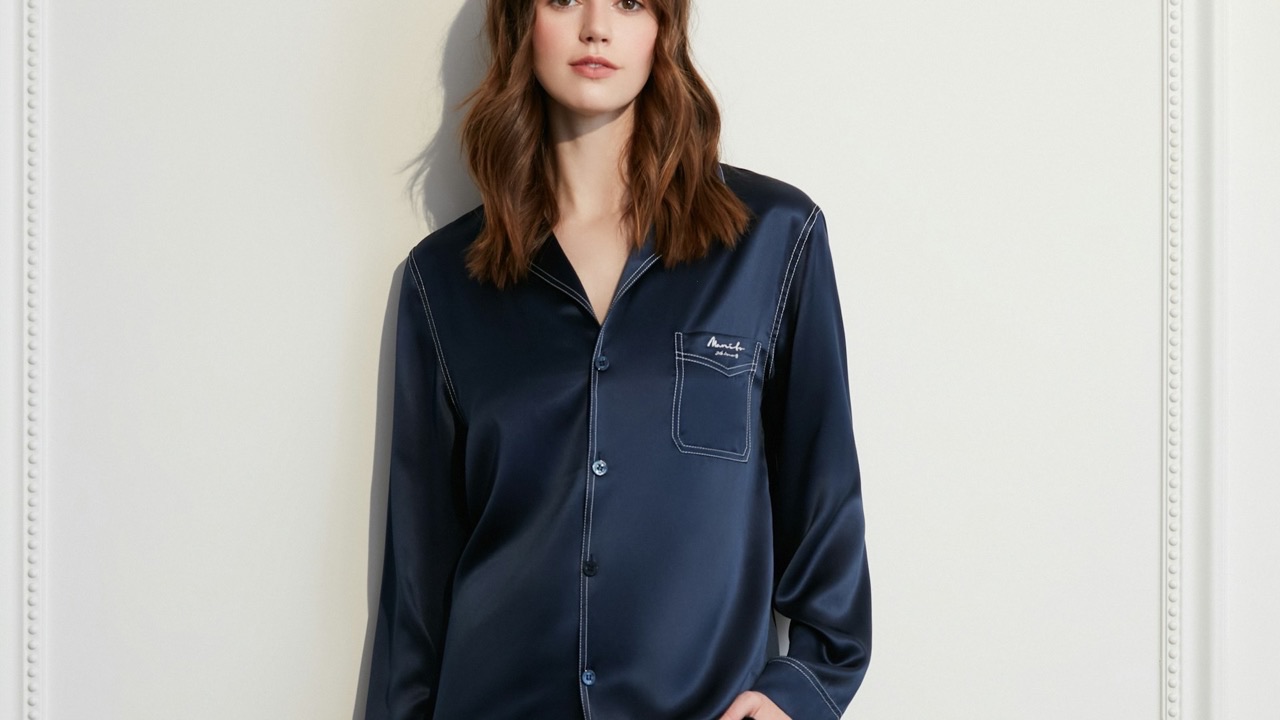
The global luxury pajamas market was valued at $4.5 billion in 2024 and is projected to reach $7.2 billion by 2033 — a CAGR of around 6.5% through the decade. The broader sleepwear category is growing faster still, at 9.3% annually, driven by a consumer shift that started during the pandemic and hasn’t reversed: people care more about what they wear at home now than they did five years ago.
That’s the market opportunity. The harder question is what it actually takes to build something in it that lasts more than a season.
Most brand launch guides focus on branding and marketing. This one focuses on the manufacturing decisions — because those are the ones that determine whether your product is worth marketing in the first place.
The Luxury Positioning Trap
There’s a version of “luxury sleepwear brand” that gets launched constantly and fails quietly: attractive photography, elevated pricing, a coherent aesthetic on Instagram, and a product that doesn’t hold up to the promise when the customer actually wears it.
The issue is usually a mismatch between how the brand positions itself and the manufacturing decisions that were made to get there. A brand charging $120 for a modal set that pills after six washes, or a “silk” product that turns out to be polyester satin once the customer holds it, is not a luxury brand. It’s a brand with a luxury price point.
Luxury in sleepwear is actually defined by a small number of tangible things: fabric quality, seam construction, colorfastness across repeated washing, and how the garment feels against skin at 2am after six months of regular use. The manufacturing partner you choose either makes those things possible or they don’t.
Fabric First: The Decision That Determines Your Ceiling
Over 64% of consumers now prioritize soft fabrics and breathable materials in sleepwear purchasing decisions, according to market data from 2025. In the luxury segment, silk sleepwear attracts approximately 18% of consumers — and those consumers show nearly 27% higher pricing tolerance than the broader category average.
That data point matters for brand positioning, but it also matters for how you approach manufacturing. Each premium fabric has a different production profile, and understanding those differences changes how you evaluate potential manufacturing partners.
Mulberry silk (19–22 momme is the sweet spot for sleepwear) is the highest-status material in the category. It’s also the most demanding to produce correctly — it requires experienced handling to prevent snags during cutting, precise tension control during sewing, and finishing processes that preserve the natural luster. A factory that works with silk daily has different tooling and different institutional knowledge than one that occasionally handles it as a special request. Ask specifically how much of their production is silk and whether you can see silk garments from recent orders before committing.
Modal has become the workhorse of accessible luxury. Derived from beech tree pulp, it has a genuinely silky hand feel, resists pilling better than bamboo viscose, holds color across many washes, and is significantly more affordable than silk at retail. A modal set that retails for $75–$95 with strong fabric quality and clean construction is a credible luxury offering. The manufacturing consideration: modal is smooth and slippery to work with, and seam puckering is a common quality failure on modal garments made in factories without proper experience. Look for flat-felled seams or French seams on internal edges rather than overlocked finishes — they indicate a higher level of construction attention.
Bamboo viscose (typically 95/5 with spandex) is where most of the market volume is. It’s the right choice for brands targeting the wellness and sustainability consumer — and at 180–200 GSM, it produces a fabric that feels genuinely premium despite a lower cost base than silk or high-quality modal. Bamboo’s limitation for luxury positioning is its post-wash behavior: without careful pre-treatment of the bulk fabric and proper seam construction, it can lose shape, develop pilling, or shift color. This is a manufacturing execution issue as much as a material issue.
The brands that navigate this well tend to work with manufacturers who have standing relationships with specific mills — not ones sourcing from whoever is cheapest that season. The fabric lot consistency that comes from a stable mill relationship is what keeps your second-season product feeling the same as your first.
What “Premium Quality” Means in Production Terms
Most manufacturers will tell you they produce premium quality. The question is what that means in practice, because “quality” in garment manufacturing is not a single thing — it’s a collection of specific decisions made at each stage of production.
Pattern precision. Luxury sleepwear has very little room for pattern error. A women’s set where the side seam is 3mm off creates a silhouette that hangs wrong — not obviously wrong, but wrong enough that the customer notices something is off without being able to articulate why. Ask to see a brand’s graded patterns or speak to their pattern-making process. Experienced luxury producers often invest in pattern software and have dedicated pattern rooms; factories oriented toward volume may grade by eye.
Seam construction. A French seam (where the raw edge is enclosed inside the seam itself) takes longer to sew than a basic overlocked seam, but it eliminates the scratchy edge inside the garment and is the standard construction on quality sleepwear. Flatlock seams are appropriate for knit fabrics and loungewear styles. If you’re evaluating samples, turn them inside out — the internal finishing tells you more about production standards than the outside does.
Colorfastness. Luxury sleepwear, particularly in silk and modal, is disproportionately purchased in light, neutral, and pastel shades — colors where dye inconsistency between lots and wash-fading are highly visible. Request a wash test report from your manufacturer, not just a fabric spec. A fabric that holds color at Grade 4 or above on the ISO 105-C06 test after five wash cycles is doing what premium customers expect.
Shrinkage control. A women’s size S that becomes an XS after three washes is not a luxury product regardless of what the fabric feels like. Pre-shrinkage treatment of fabric before cutting — not just relying on the end consumer washing carefully — is standard practice at quality factories. Ask whether pre-shrinkage is included in the production process or whether it needs to be specified.
The Manufacturing Partner Question
Finding the right manufacturing partner for a luxury sleepwear line is a different exercise than finding one for a mass-market line. The criteria shift.
Volume is less important than craft. A factory that runs 300,000 units per month may have cost advantages, but the production line is optimized for speed and consistency at scale — not for the kind of detail work that distinguishes a luxury garment. A factory in the 50,000–150,000 unit per month range, with a dedicated sample room and experienced pattern makers, may serve a luxury positioning better even if the unit pricing is slightly higher.
Certifications matter differently for luxury. OEKO-TEX STANDARD 100 is the baseline — it tells you the fabric has been tested for harmful substances, which is a minimum requirement for premium skin-contact products. GOTS certification goes further, covering the entire organic supply chain from fiber to finished garment. For brands targeting health-conscious and sustainability-oriented luxury consumers — a large and growing segment — GOTS provides a verifiable claim that pure marketing language can’t replicate.
luxury sleepwear manufacturer, based in Shantou’s established garment manufacturing district, holds both OEKO-TEX STANDARD 100 and BSCI certifications alongside FSC and GOTS credentials — a compliance stack that supports premium market entry across North American and European retail channels. Their 3-day sampling turnaround and 20 years of OEM experience in silk, modal, and bamboo lines means the development cycle for luxury styles is compressed without the quality trade-offs that rushed sampling usually produces.
Sampling speed matters more for luxury than people expect. Luxury garments require more iteration — getting the drape right on a silk charmeuse nightgown takes more rounds than getting a cotton t-shirt right. A factory that turns samples in 3–5 days versus 10–14 days makes a material difference to how many rounds of revision you can complete within a reasonable development window.
Pricing Architecture for Luxury Sleepwear
Luxury sleepwear brands that work consistently command a 4x–6x markup from landed cost to retail price. A women’s modal set with a landed cost of $18–$22 per unit can retail credibly at $85–$110 with the right packaging, brand story, and product quality. A mulberry silk set with a landed cost of $35–$50 positions comfortably at $150–$250 retail in the current market.
The math works because of the pricing tolerance in the segment. The risk is that the markup is only sustainable if the product quality at the landed cost is genuinely there — if you’re sourcing a silk-labeled garment that’s actually polyester satin, or a modal set that pills in three months, the customer experience destroys the repeat purchase and referral economics that luxury brands depend on.
Two things protect the margin sustainably: a manufacturing partner whose quality is consistent across batches (not just on the first sample), and a clear fabric story you can actually verify and stand behind. The brands that have built durable positions in this market — Eberjey, Lunya, Lake Pajamas at different price points — are all brands where the product has held up to the marketing claim.
Starting Small Without Starting Cheap
The instinct when launching a luxury brand on limited capital is to start with lower-cost fabrics and upgrade once revenue permits. This often backfires. The initial product is what defines the brand’s reputation in the market, and customers who try a modal set that doesn’t meet the expectation set by the price point and the branding rarely come back to try the silk line.
A more productive approach: launch with fewer styles but make each one genuinely right. Two or three styles — a modal pajama set, a bamboo robe, and a silk nightgown, for example — produced with proper construction and premium-grade materials at MOQs that manage cash flow exposure, creates a tighter collection that can be marketed more cohesively and build a real reputation before you expand.
The 100-piece MOQ now available through quality manufacturers makes this approach viable in a way it wasn’t ten years ago. A 100-unit launch of a well-made modal set costs less capital to risk than a 500-unit launch of a compromised one, and the upside of the former — a product customers tell their friends about — is significantly larger.
The Details That Separate Luxury From Premium-Priced
There’s a hierarchy of signals that luxury customers — consciously or not — use to evaluate whether a sleepwear purchase was worth the money.
Packaging. Tissue wrap, a ribbon pull, a substantial box or bag: these are not superficial. For a DTC brand, the unboxing moment is the first physical brand touchpoint, and its quality predicts how the customer will feel about the product before they’ve even tried it on. Discuss packaging in the brief stage, not as an afterthought after production.
Labels and trims. A woven label that scratches at the neckline undermines the entire sleep experience. Silk-printed labels, or labels that sit outside the garment entirely, are the standard in genuine luxury sleepwear. Similarly, the weight and finish of buttons, the smoothness of the drawstring cord, the elastic width at the waistband — these are the details that customers notice over time and that differentiate brands that understand their category from those that just have the right price on the tag.
Consistency across the size range. A luxury brand’s size M and size XL should feel equivalent in quality and proportion. Many brands get the hero size right and let quality drift at the size extremes. Requesting samples in at least two non-median sizes during the approval process catches this before bulk production.
Timing the Market
Sleepwear has two significant commercial peaks: the holiday gifting window (October through December) and Valentine’s Day (January through February). Luxury sleepwear is disproportionately gift-driven — approximately 40% of purchases in the premium segment are for gifting rather than self-purchase.
Working backwards from a Q4 holiday launch: bulk inventory needs to be available by September to support wholesale orders and marketing campaigns. That means production completion by August, which means sample approval by June, which means factory engagement and brief submission by April at the latest. Brands that start this conversation in July find themselves either launching late, compressing production timelines in ways that cost quality, or missing the season entirely.
The brands that launch successfully in the holiday window tend to be the ones that started their manufacturing conversations five to six months before they wanted product in hand.
The luxury sleepwear market is genuinely accessible to independent brands in a way that was not true a decade ago. Low MOQs, global logistics, and direct-to-consumer distribution have lowered the capital barrier significantly. What hasn’t changed is the fundamental requirement: the product has to be worth what you’re charging for it. Everything else in the launch process — the brand story, the photography, the channel strategy — amplifies a good product or accelerates the failure of a bad one.
The manufacturing decision is where that foundation gets set.